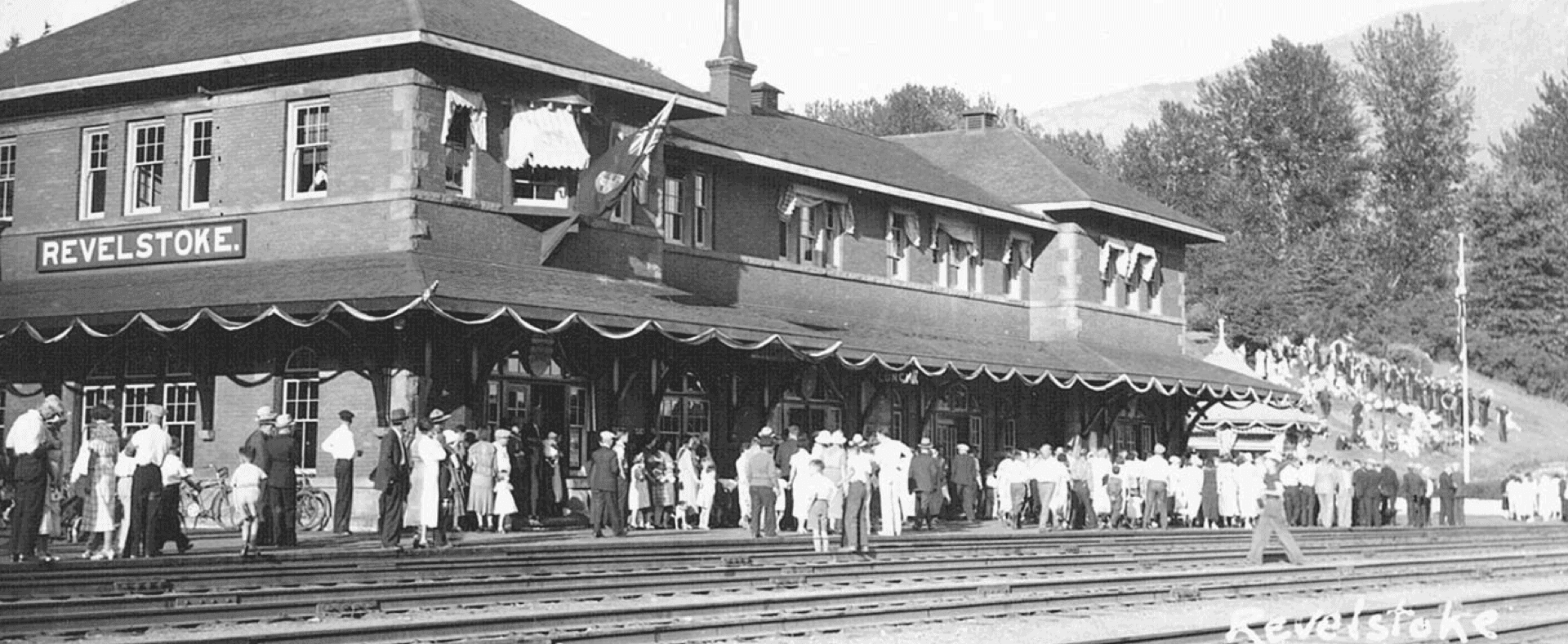
Roots in Rail.
Revelstoke is a train-lovers' paradise with significant history in the building of Canada's railway network.
Timeline
1880
The Push West
The CPR pushes west through the Selkirks to complete a coast-to-coast rail link.
1881
Albert Rogers
Rogers set out to discover a direct route across the Selkirk range. CP promised him a five-thousand-dollar bonus if successful. By the end of the survey, he claimed the summit would become known as Rogers Pass. His 5k cheque remained uncashed, for fame was his pursuit, not money.
1885
The Last Spike
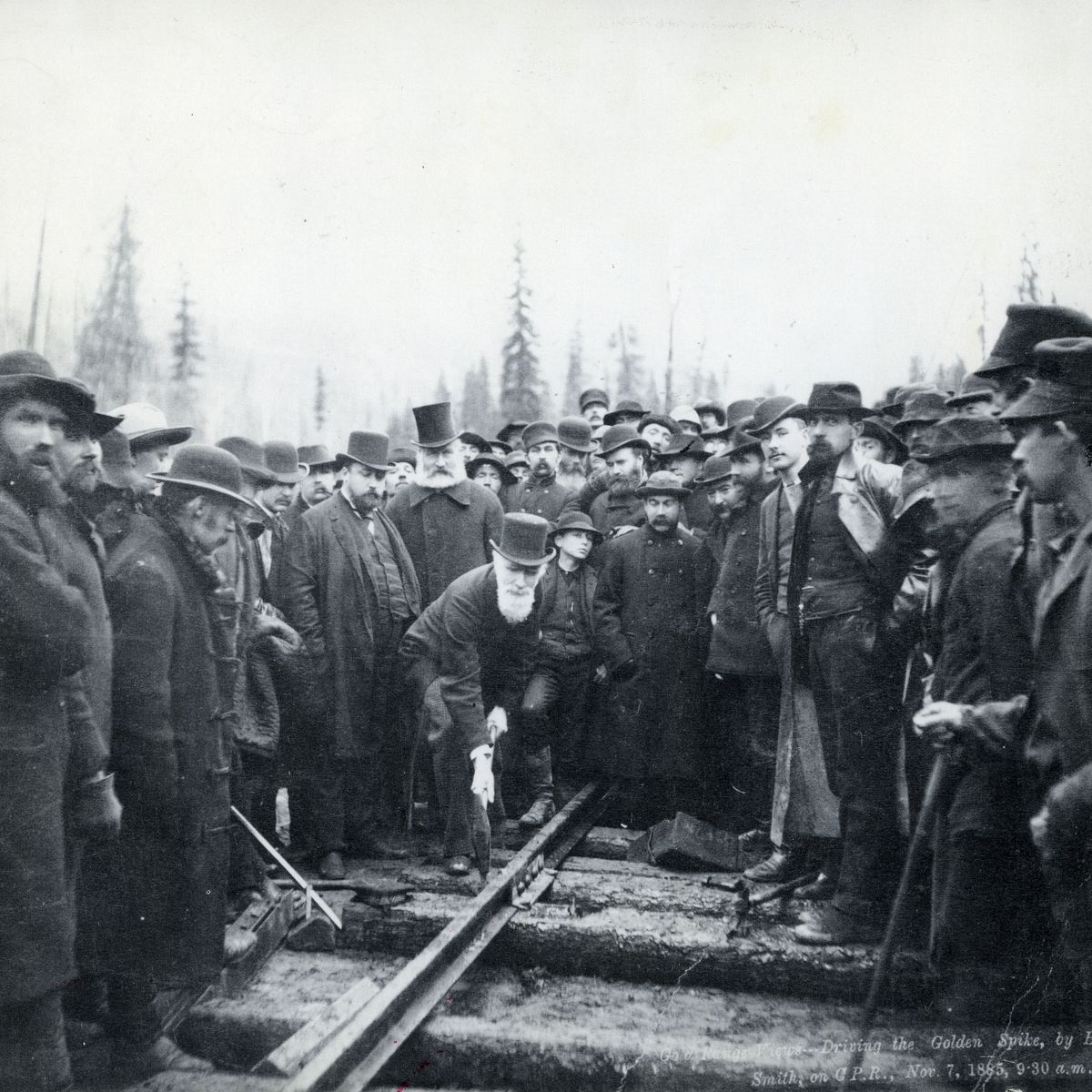
The last spike of the CPR is driven at Craigellachie, just west of present-day Revelstoke.
1886
Farwell Becomes Revelstoke
In 1885, A.S. Farwell surveyed and established the townsite of Farwell near the Columbia River. CPR chooses a different alignment for its station, shifting development east. By 1886, the town was renamed Revelstoke, after Lord Revelstoke, a British financier who helped secure CPR funding.
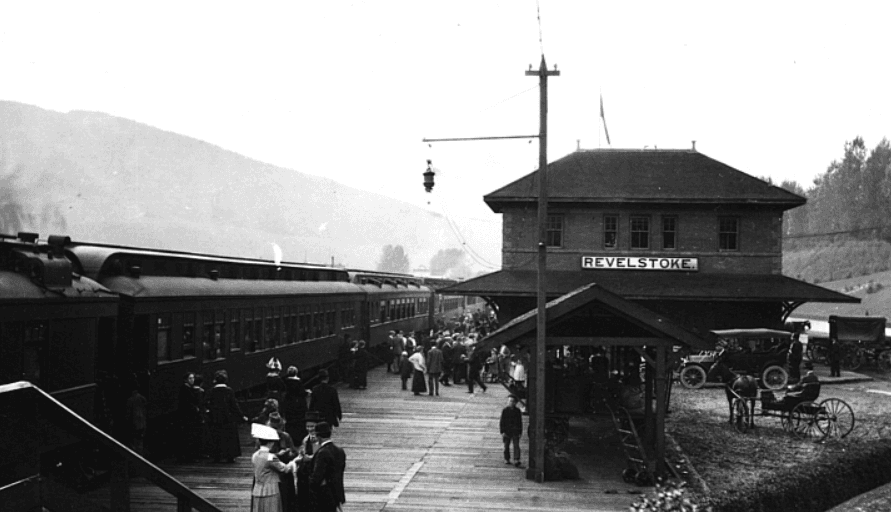
1905
The Revelstoke Station
The Revelstoke station was built to serve the nearby city of Revelstoke. The station was rebuilt in 1923, extended in 1966, then torn down and rebuilt in 1978.
1910
Avalanche Destruction
At Rogers Pass, a CPR snow-clearing crew was hit by a massive avalanche. 58 workers died, 32 of them were Japanese labourers. It remains Canada's deadliest avalanche disaster.
1916
The Connaught Tunnel
CPR opened the Connaught Tunnel under Mount Macdonald. It was the longest railway tunnel in the British Empire at 8km long.
1988
Mount Macdonald Tunnel
The Mount Macdonald tunnel opened and was 14.7km long. It replaced the Connaught Tunnel for most westbound freight.
1990
Passenger Service Changes
VIA Rail re-routed their service, and the Revelstoke downtown station no longer saw regular scheduled passenger stops, though freight and luxury rail tourism continued.
1993
Revelstoke Railway Museum
The Revelstoke Railway Museum opened to document railway engineering history, Japanese and Chinese labour contributions, and the 1910 avalanche.
1886
Glacier House Luxury Hotel
The Canadian Pacific Railway built a luxury alpine hotel for train passengers, marketed internationally to wealthy European and American travellers.
1920
Rail Town Era
Revelstoke's key developments included expanding neighbourhoods, shops, and civic buildings tied to CPR employment growth.
1993
5468 Returns to Revelstoke
CPR Locomotive No. 5468, a Mikado P-2k class 2-8-2 steam locomotive built in 1948, was returned to Revelstoke and displayed beside the Railway Museum as a permanent outdoor exhibit.
Origins.
Revelstoke began as an outpost on the transcontinental railway line in the 1800s. The Canadian Pacific Railway (CPR) drove west from the prairies with the goal of linking Canada coast-to-coast.
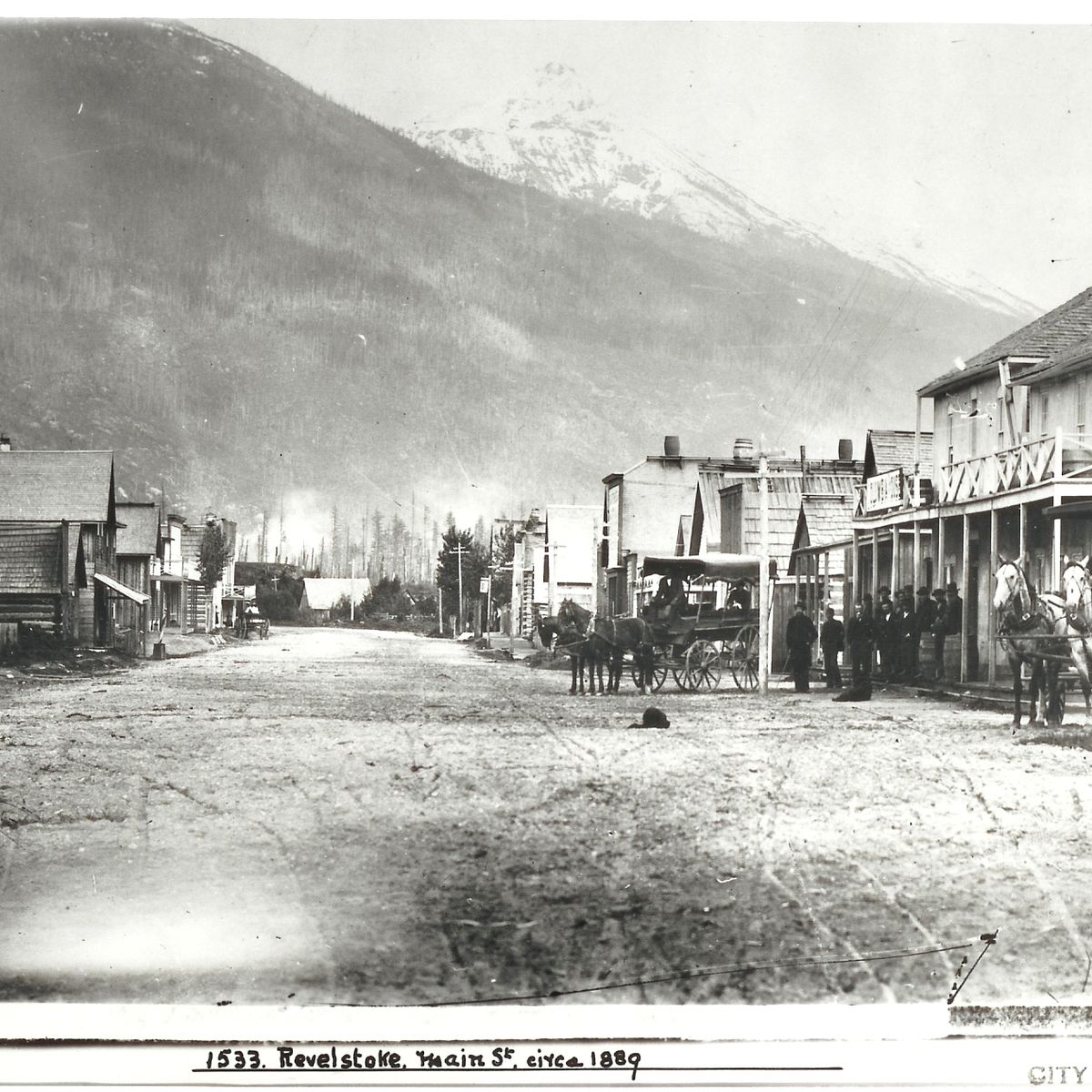
Front Street ca 1889 | Revelstoke Museum & Archives
1880s
Exploitation of Chinese Workers
Between 1880 and 1885, approximately 15,000 Chinese Nationals were employed along the trailway line from the coast to Craigellachie. They were paid less and given tedious and dangerous jobs. It's unknown how many were killed due to dangerous work conditions, disease, and illness due to a lack of documentation.
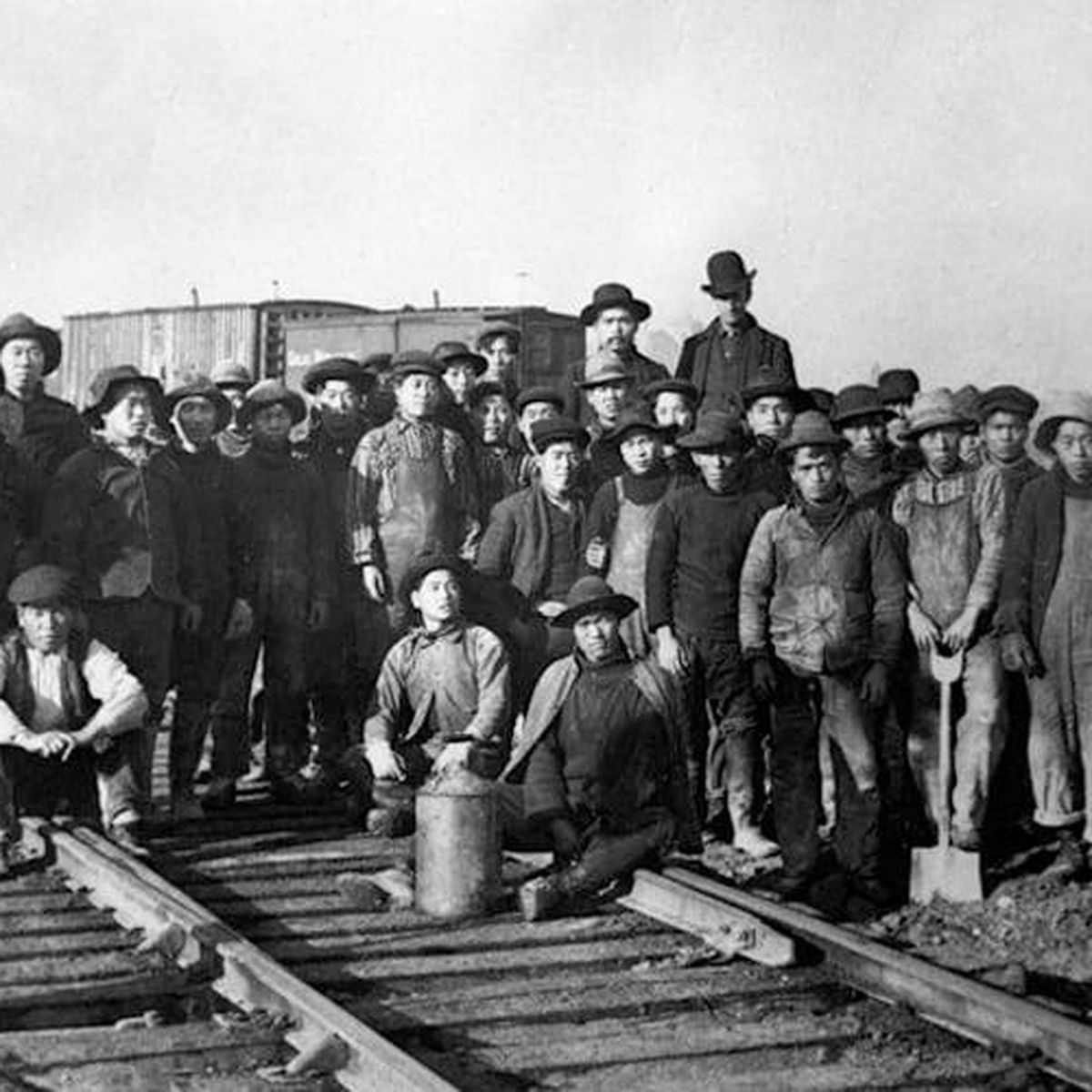
Chinese Workers on the Canadian Pacific Railway c1884 © British Columbia Archives / Toronto Railway Museum
1885
The Last Spike
The last spike was driven into the Canadian Pacific Railway at Craigellachie on Nov. 7, 1885. There are two versions of this famous photo. One was of Donald Smith driving a spike into the railway, surrounded by white men in suits.
Workers along the railway took another photo, in Donald, BC, reflecting a small group of the workers who laboured along the railway.
Not pictured are the 17,000 Chinese railroad workers who were pivotal in the construction of uniting Canada geographically. More than 4,000 Chinese workers lost their lives during construction.
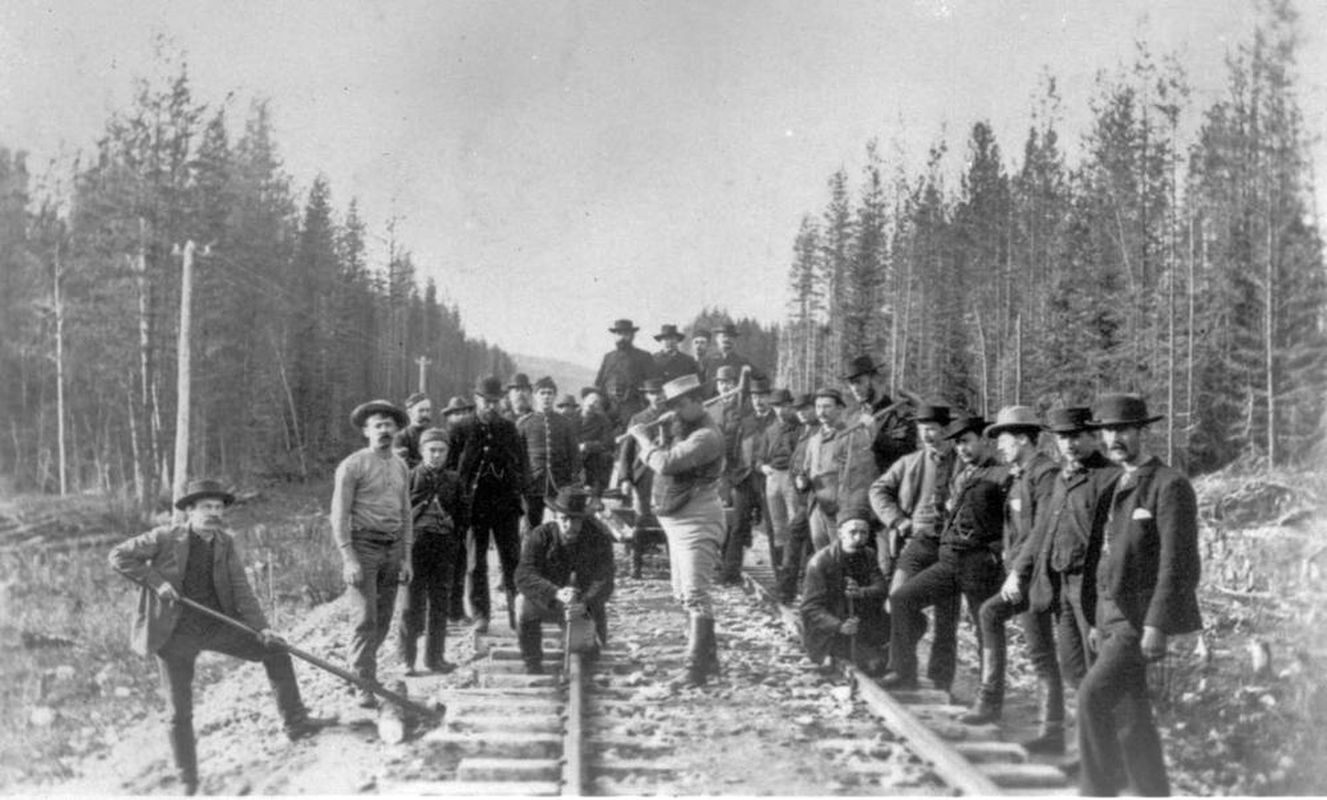
Canadian Pacific Railway employees, waiting for the train to take them east, pose near Donald, BC, on the day the Last Spike was driven on the CPR, 7 Nov 1885 © BC Archives (D-02469)
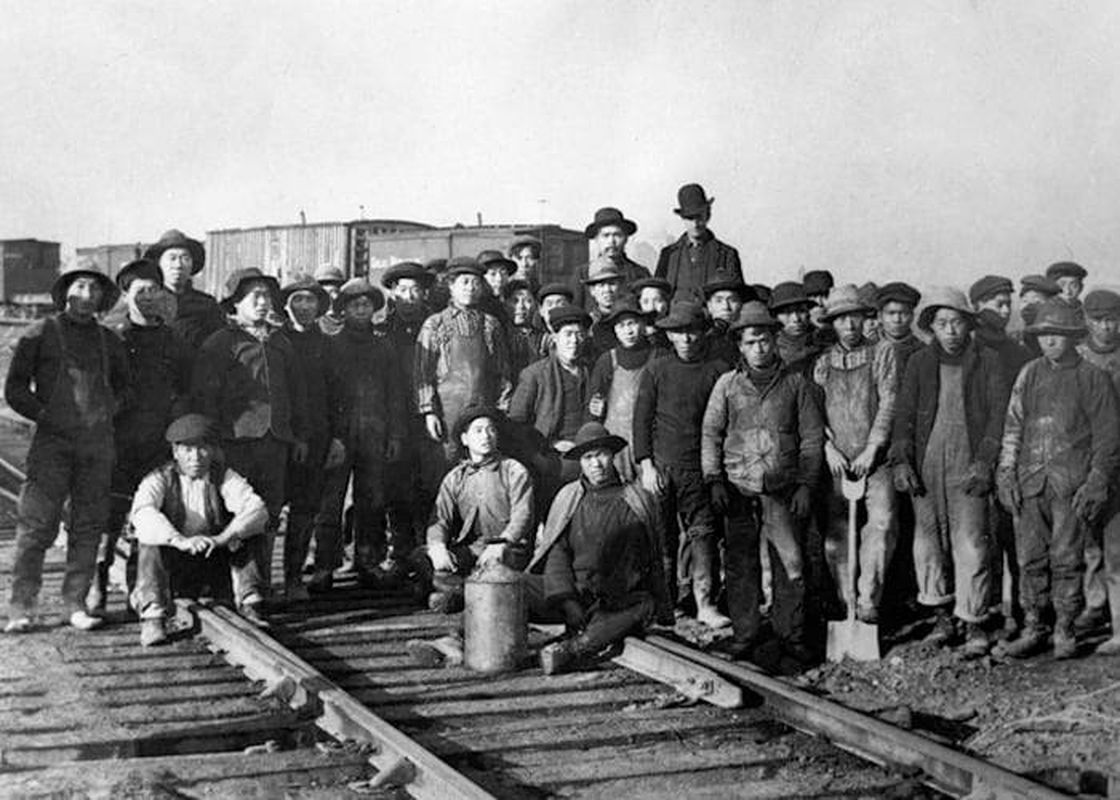
Chinese Workers on the Canadian Pacific Railway c1884 © British Columbia Archives / Toronto Railway Museum
1910
Canada's Worst Avalanche Disaster
On the afternoon of March 4, 1910, an avalanche came down in Rogers Pass from Mount Cheops, burying the mainline of the Canadian Pacific Railway. Men were dispatched that evening from Revelstoke along with a rotary snowplow to clear the line.
As the cleanup crew arrived to snowshed 17, sleet fell, adding additional weight to the already unstable snowpack. Rain and snow continued into the night as the workers cleared the track.
Disaster struck at around midnight when a second avalanche came down from Avalanche Mountain on the opposite side of the valley. Around 400 metres of track were buried, and the 91-ton locomotive and plow were hurled 15 metres. The wooden cars behind the locomotive were crushed, and all workmen but one were instantly buried.
The rotary snowplow had created a trench, many of whom were down there shovelling. Of the 58 men who died, 32 were Japanese. It would be generations until their names were uncovered.
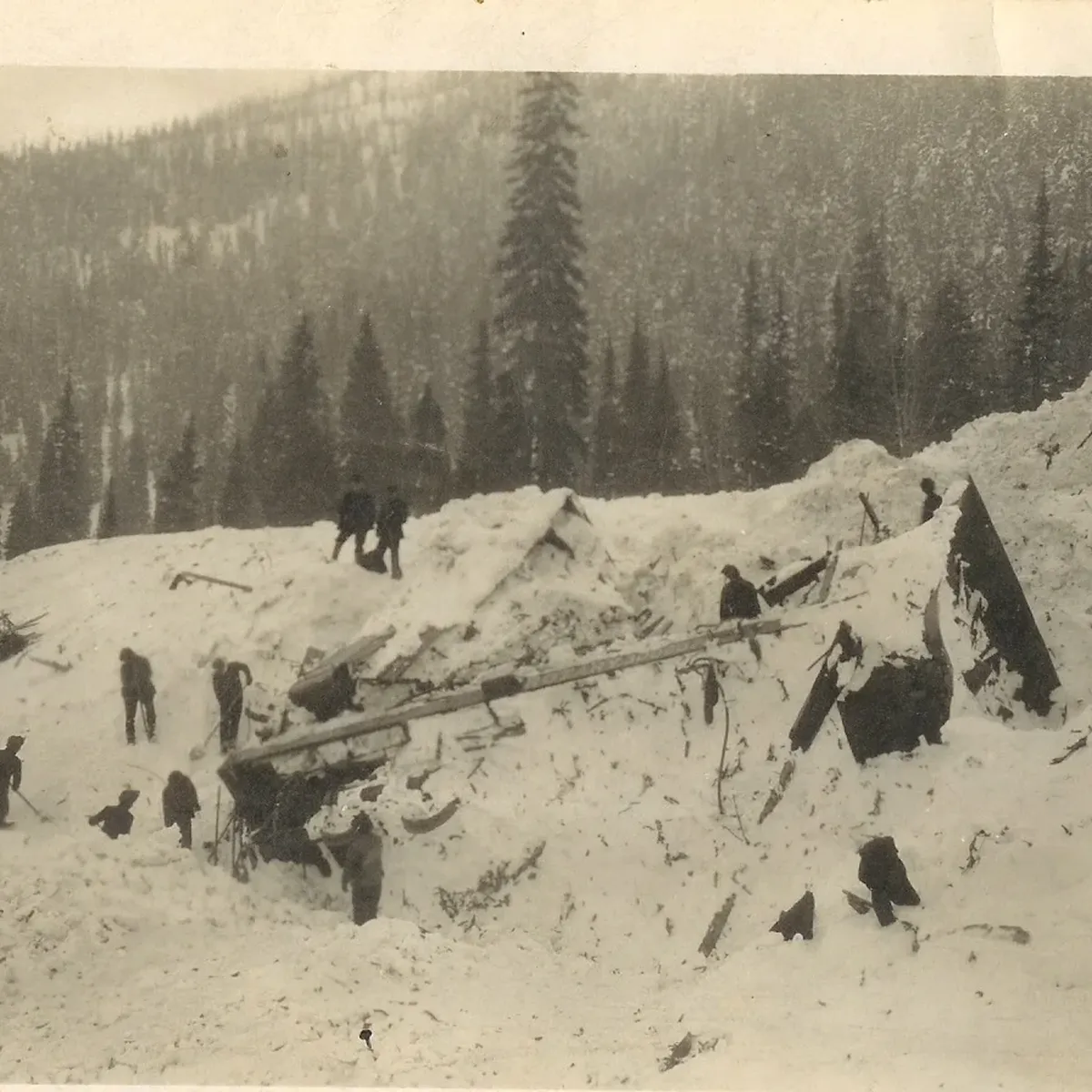
Clearing Avalanche - March 10, 1910 - Revelstoke Museum and Archives
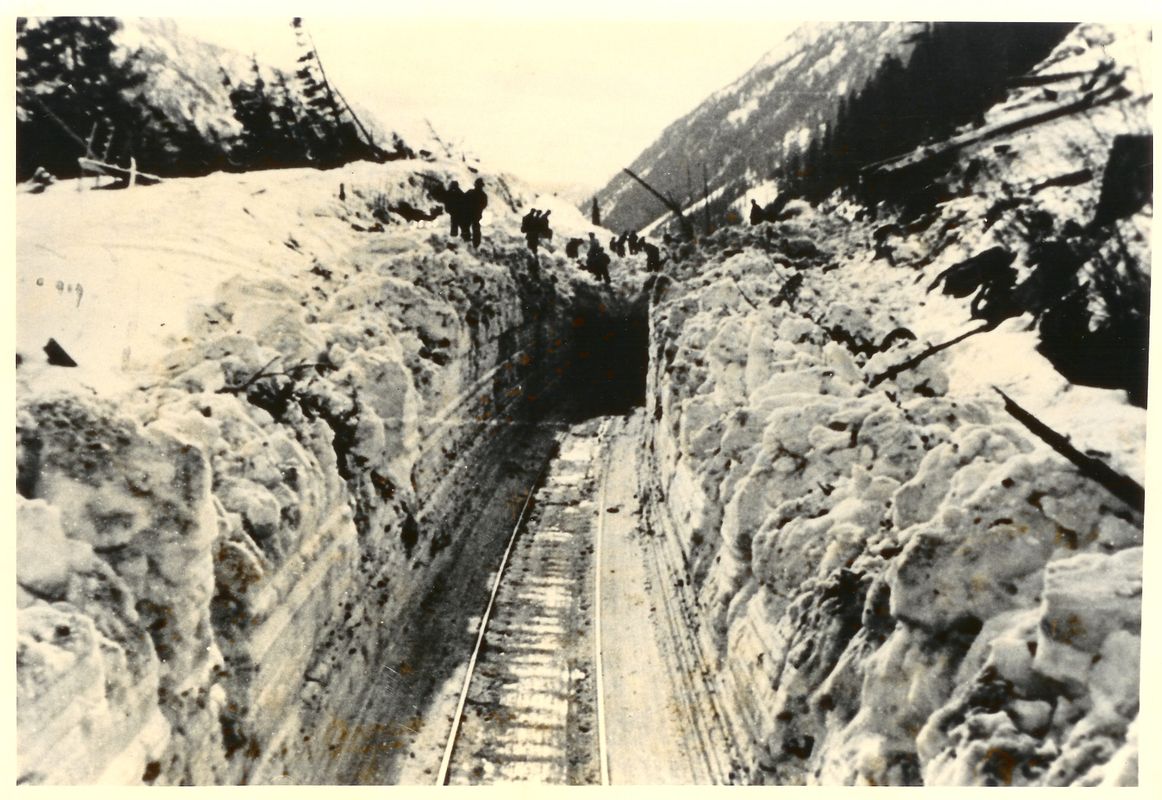
888 Snowslide Rogers Pass © Revelstoke Museum & Archives / Revelstoke Museum & Archives
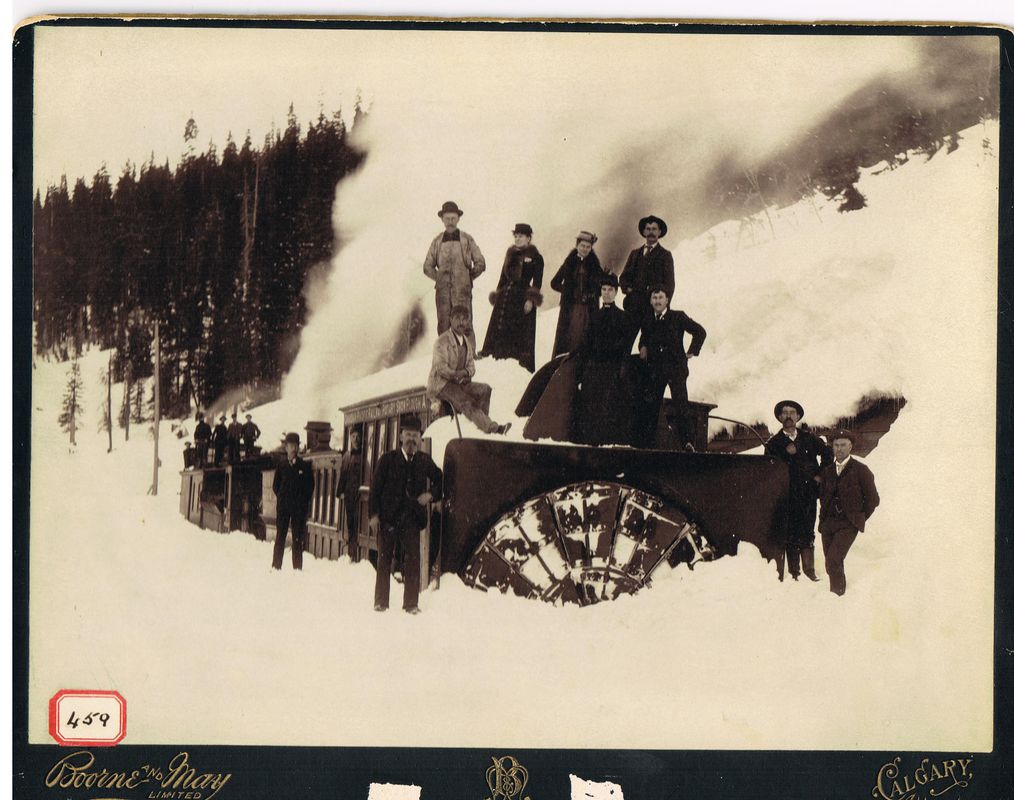
697 Rotary Snow Plow in Rogers Pass, circa 1895 © Revelstoke Museum & Archives / Revelstoke Museum & Archives
1993
5468 Returns to Revelstoke
Locomotive 5468 is a preserved Mikado P-2k class 2-8-2 steam locomotive, built in 1948 by Montreal Locomotive Works for mountain service, handling steep grades like those through Rogers Pass.
The 2-8-2 wheel arrangement made it powerful yet nimble for the curves and inclines of the Selkirk mountain ranges.
This was one of the last steam locomotives ever built in Canada. Following retirement in 1962, it was stored for 30 years before being brought home to Revelstoke.
Ernie Ottewell and Fred Olsson led the charge with a couple of dozen community members to bring 5468 back home.
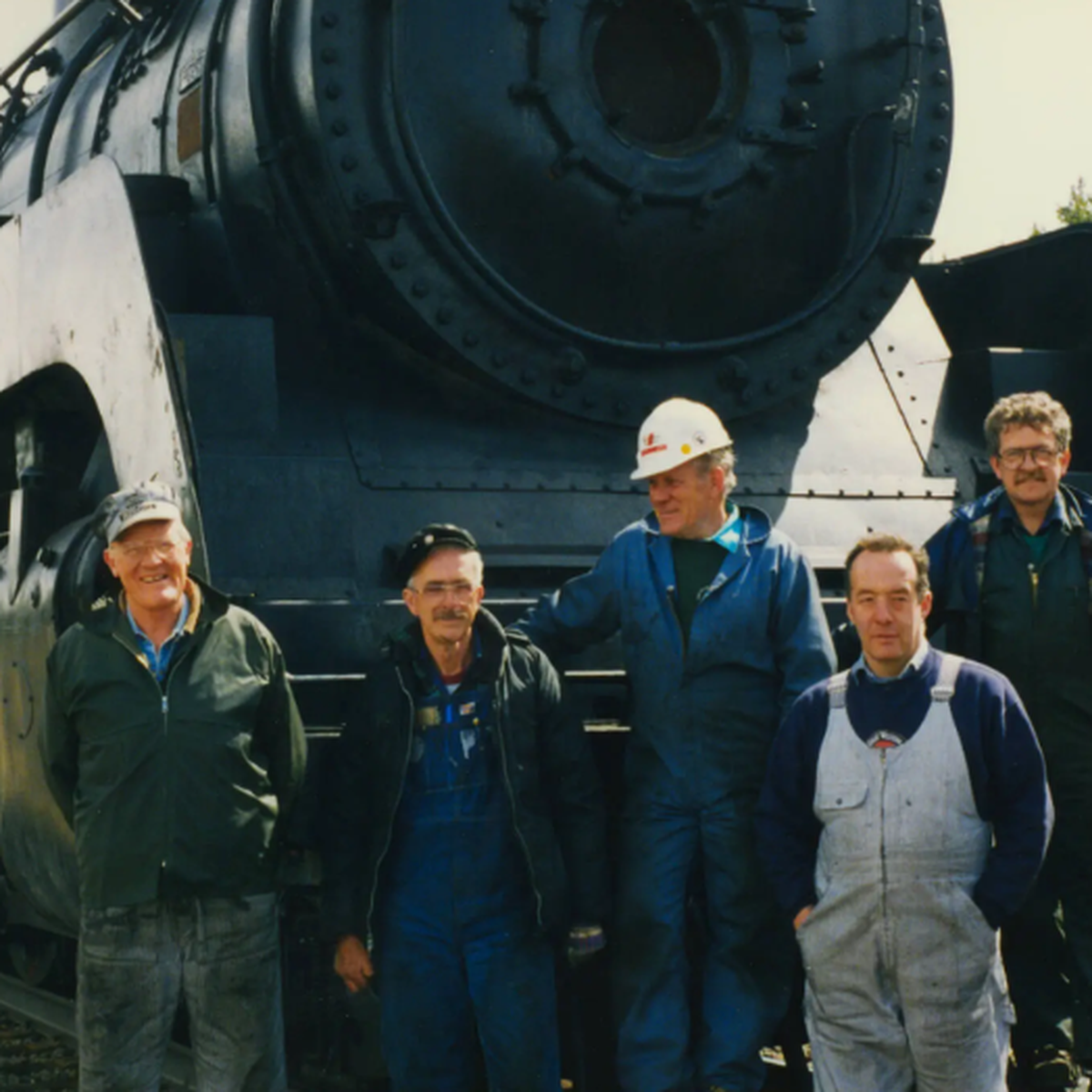
5468 Steam Locomotive - Harry Home - Ernie Ottewell, Gordon Jess, Don Hawker, Dean Handley © Revelstoke Railway Museum Collection / Revelstoke Railway Museum Collection
More History.


