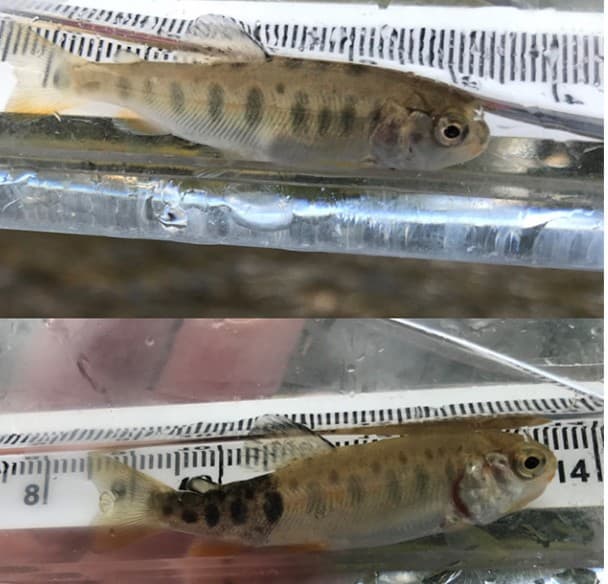
What is this?
Online seminar for ecosystem specialists and recreationallists alike. Participants will learn how to identify disease transmission risks associated with field operations, equipment use, and recreational activities, and how to apply “Clean, Drain, Dry” principles effectively. The training will provide detailed decontamination protocols for sampling gear, PPE, equipment, and recreational gear, as well as guidance on developing SOPs, BMPs, and contract language to reduce whirling disease risk.
Background:
Whirling disease (Myxobolus cerebralis) has recently been detected in the Columbia Basin and represents a significant emerging threat to salmonid populations and aquatic ecosystems in southeastern British Columbia and beyond. This online training is designed to equip those working in and around freshwater systems with the knowledge and practical tools needed to understand whirling disease and reduce the risk of its spread.
Through a combination of expert presentations, real-world case studies, and applied guidance, participants will gain a clear understanding of the biology of whirling disease, how it spreads, and the risks it poses to fish populations. The course will also cover current regulatory requirements, lessons learned from Alberta’s response to the 2016 outbreak, and the current status of whirling disease in BC.
Course outline
The course will be delivered over two half-day online sessions via Zoom. You are welcome to attend one or both of the sessions. A more detailed outline is available upon request.
Day 1. April 23
(09:00–12:00) Pacific: Whirling disease biology and current status in BC
Day 2. April 24
(09:00–13:00) Pacific: Risk mitigation, decontamination, and planning. Public awareness and regional action plan ‘next steps interactive session’
Who should attend?
This free, online training is open to everyone with an interest in protecting freshwater ecosystems and fish populations. It is particularly relevant for people who work, volunteer, or spend time in river environments and want to play an active role in preventing the spread of whirling disease.
We strongly encourage participation from:
Land managers responsible for planning and overseeing activities in freshwater and riparian areas
Environmental consultants involved in monitoring, assessment, and restoration work
In-stream contractors and field crews working directly in rivers, streams, and wetlands
Recreational users such as anglers, paddlers, and other river users
Stewardship groups and community volunteers who regularly monitor, care for, and clean up local waterways
Recreational users and community stewards are especially welcome, as they are often the first to notice changes in river environments and play a vital role in early detection, reporting, and prevention. No prior technical knowledge is required. Anyone who wants to help keep BC’s rivers healthy and free from invasive aquatic diseases will benefit from attending.